Korean convenience stores are a destination of their own — here is what locals actually make
GS25 · CU · 7-Eleven
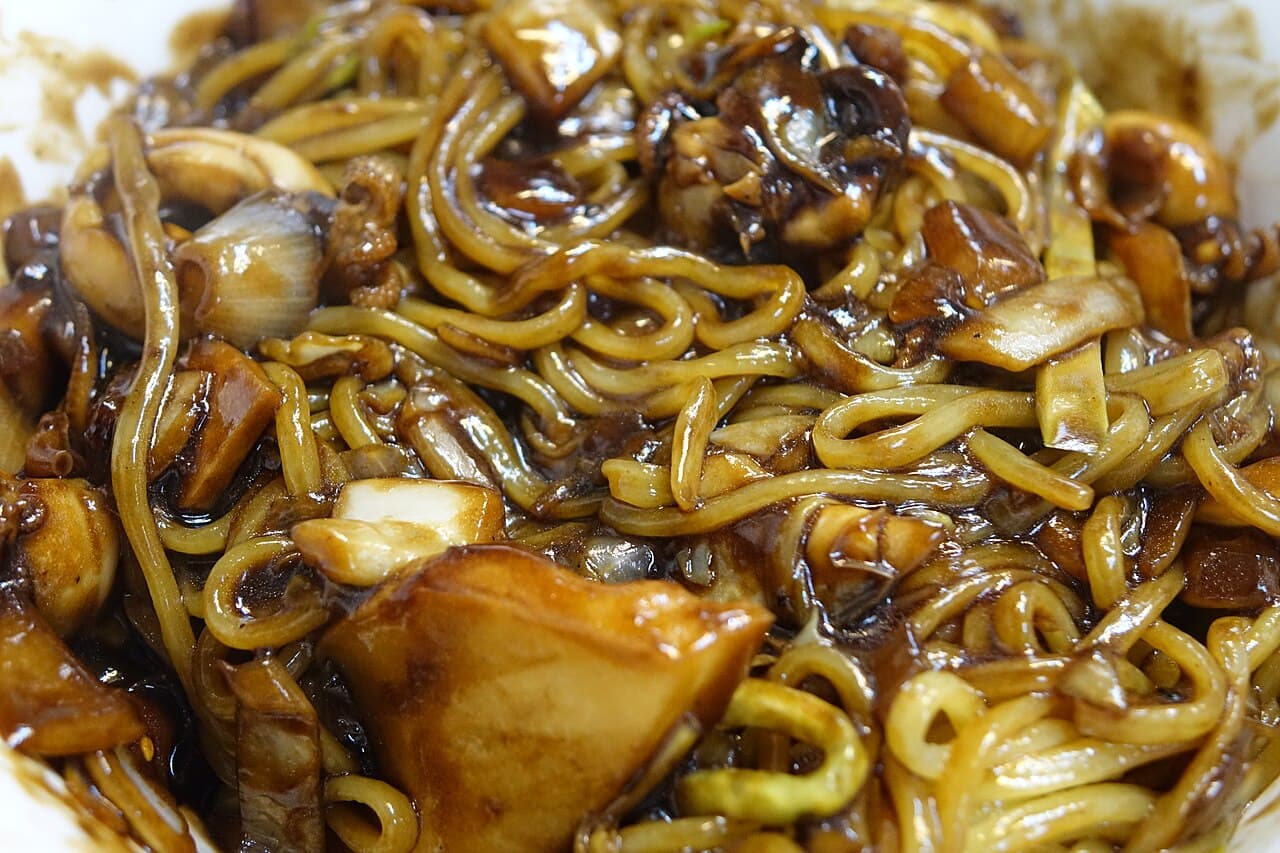
Jjapaguri (Ram-don)
The noodles from the film Parasite — black bean ramyeon mixed with spicy udon ramyeon
about 8 min
What to buy
Chapagetti (1 pack)1,500 KRW
Neoguri (1 pack)1,500 KRW
Total3,000 KRW
How to make it
1Boil both blocks of noodles together for about 4 min 30 sec
2Drain the water, keeping about 8 tablespoons in the pot
3Add the Chapagetti powder and oil, plus half of the Neoguri soup packet
4Stir over low heat for 30 seconds and it is done
Tip Using the whole Neoguri packet makes it salty and drowns the black bean flavor — half is the trick.
GS25 · CU · 7-Eleven
Cheese Buldak
Korea's most famous fire noodles, tamed with cheese
about 7 min
What to buy
Buldak stir-fried ramyeon (1 pack)1,800 KRW
String cheese (1–2)2,000 KRW
Rice triangle (optional)1,500 KRW
Total5,300 KRW
How to make it
1Boil the noodles for 5 minutes
2Drain to about 8 tablespoons of water, then stir in the sauce
3Tear the cheese over the top, cover, and wait one minute
Tip New to Korean spice? Use half the sauce. Milk cools it far better than water or soda.
GS25 · CU · 7-Eleven
Rice Triangle + Cup Ramyeon
The most ordinary convenience-store meal in Korea, and it costs under 5,000 won
about 5 min
What to buy
Tuna-mayo rice triangle1,500 KRW
Shin Ramyun cup1,700 KRW
Total3,200 KRW
How to make it
1Fill the cup to the line with hot water from the dispenser and wait 3 minutes
2Open the rice triangle by following the numbers 1, 2, 3 on the wrapper
3Dip a corner of the rice triangle into the soup as you eat
Tip Hot water, a microwave, and chopsticks are all free inside the store — just use them after paying.
GS25CU7-Eleven
Cup Rabokki
The classic snack-bar dish — tteokbokki with ramyeon noodles — rebuilt at the counter
about 6 min
What to buy
Cup tteokbokki2,500 KRW
Small cup ramyeon1,200 KRW
String cheese (optional)2,000 KRW
Total5,700 KRW
How to make it
1Microwave the cup tteokbokki as the label says
2Add hot water to the cup ramyeon and wait 3 minutes
3Drain the ramyeon and move just the noodles into the tteokbokki
Tip Leftover sauce? Stir in a rice triangle at the end — that is how Koreans finish the dish.
GS25CUemart24
Convenience Store Affogato
A 3,000-won dessert made from the in-store coffee machine and one ice cream cup
about 3 min
What to buy
Hot brewed americano1,500 KRW
Vanilla ice cream cup1,800 KRW
Total3,300 KRW
How to make it
1Pay first, then pull a hot americano from the machine
2Open the lid of the ice cream cup
3Pour the coffee over the ice cream a little at a time and eat as it melts
Tip Pouring all the coffee at once just makes watery coffee — use about half.
CU
Cream Bread + Latte
The combo that started Korea's convenience-store dessert craze — it sells out by afternoon
about 2 min
What to buy
Cream-filled bread bun3,200 KRW
Cup latte2,500 KRW
Total5,700 KRW
How to make it
1Pick the bun from the chilled shelf — it is meant to be eaten cold
2Split it in half to see the cream layer
3Alternate bites with the latte
Tip The flavors rotate weekly — check the top row of the chilled shelf for the newest one.
Prices are rough estimates and change by store and promotion.
HAN RIVER
How to work the Han River ramyeon machine
There is an order the videos never show — and no water comes out until you scan the barcode
Scan the barcode first, or no water comes out.
Put the cup in, press every button, and nothing happens — the machine is not broken, it is waiting for the barcode. Hold the code on the side or bottom of the cup flat against the scanner window (the glass with the red light), 5–10 cm away, until it beeps.
The barcode does two jobs: it proves you paid for that cup inside the store, and it tells the machine which product this is so it can pour the exact water volume and set the right time. Shin Ramyun and Yukgaejang need different amounts — the machine cannot guess.
If it will not read, rotate the cup slowly, flatten any wrinkle in the label with your thumb, and move it slightly closer and farther. After about 15 seconds with no beep, the product may not be registered on that machine — show it to the staff.
Show to staff
이 바코드가 안 찍혀요.
I ba-ko-deu-ga an jji-kyeo-yo.
This barcode won't scan.
1
Buy it inside first
The machine is a cooker, not a vending machine — pay for the cup at the counter first. Take chopsticks from the bin by the register yourself; nobody hands them to you.
2
Prep before you walk up
Peel the lid only to the dotted line or arrow — you need it to cover the cup while it cooks. Tear open any separate vegetable-flake sachet and add it now. Doing this with people waiting behind you is how mistakes happen.
3
Seat the cup and start
After the beep the screen shows the product name and cook time. Seat the cup squarely in the well and press start — water pours automatically to the right level. Do not lift the cup while it runs: it is near-boiling and pours on a fixed timer, not a sensor.
When to stir
Left alone, the bottom turns to mush while the top stays crunchy. Every bouncy noodle shot you have seen was stirred off camera.
About 1 minute in
Slide chopsticks under the noodle block and lift it once, then set it back down. This is the important one — it breaks the brick apart so water reaches the middle.
About 2 minutes in
Stir gently two or three turns to even out the broth and the flakes.
After the buzzer
Stir once more, re-cover, and wait another 30 seconds. The residual heat finishes the noodles and makes them chewy instead of stiff.
When you are done
Pour the broth into the broth barrel first
Beside the machine or at the bin station outside there is a separate drum labelled 국물 버리는 곳 — a barrel with a mesh strainer. Pour the leftover broth through the mesh first, then put the cup, lid film and wooden chopsticks in 일반쓰레기 (general waste). Pouring soup into a dry bin splits the bag when staff lift it, which is the single most common complaint at Han River parks.
일반쓰레기
Cup, lid film, wooden chopsticks, wet wipes. The cup is coated paper — it does not go in plastic.
플라스틱
Drink bottles and plastic forks. Empty the bottle before binning it.
캔 / 병
Cans and glass bottles.
Where the machines are
Look for a CU or GS25 with outdoor tables — not every store has one.
Yeouido Han River Park
The classic, with the most machines — and a queue on summer weekend evenings.
Banpo Han River Park
Time it with the Moonlight Rainbow Fountain show.
Ttukseom Han River Park
Closest to a station — Ttukseom Resort on Line 7.
Jamwon & Mangwon
Quieter, with more locals than visitors.
KOREAN BBQ
The hidden rules of a Korean BBQ table
Starting with the fact that the price is per person — plus who does the grilling, and how to build a ssam
The menu price is per person, not per plate
“삼겹살 18,000” is the price for one person's serving, usually 150–200 g — two people ordering it pay 36,000 won. On top of that, most grill houses will not fire a grill for a single portion, so ordering one gets you “from two portions, please.” Rice and stew are charged separately; side dishes and lettuce are free and refillable.
If you are alone
Just order two portions
You pay double, and nobody finds it odd. If it is too much, ask to take the rest away.
Find a 1인분 place
Look for 1인분, 혼밥 or 혼고기 on the sign or in the map listing. They are increasingly common in Seoul, and this is the cleanest solution.
Order a set or assorted platter
A 세트 or 모둠 sometimes clears the minimum on its own, and you get to try several cuts.
Switch to a different dish
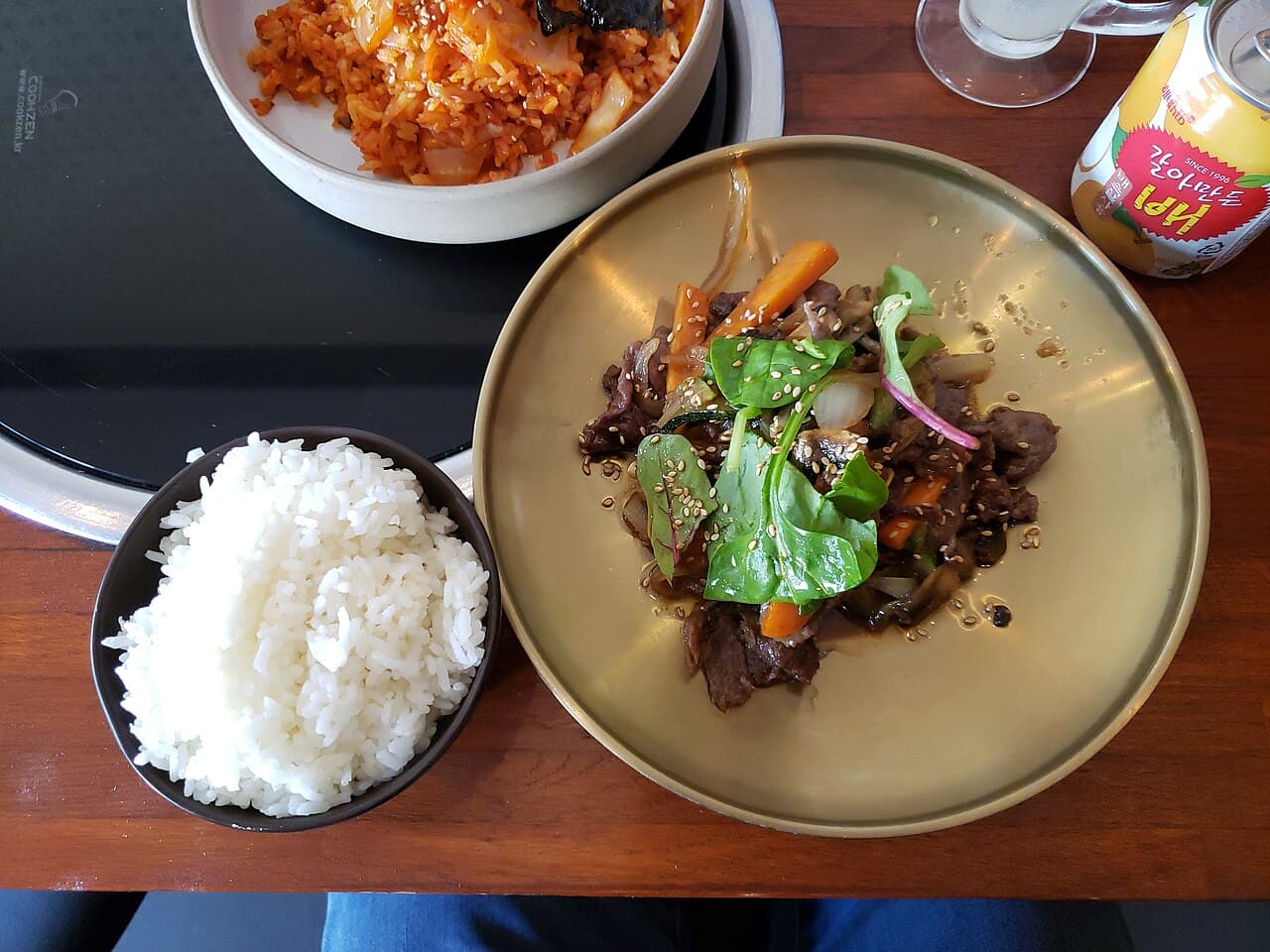
제육볶음 (spicy stir-fried pork), a 불고기 set, or 김치찌개 give you the same flavors with no minimum, no grill, and half the price.
Who does the grilling?
Tongs and scissors are set at your seat
You are the cook — that is why they gave you the tools. If instead a staff member arrives in an apron carrying their own tongs, sit back and let them.
The price per portion
Pork belly or neck in the 12,000–20,000 range is almost always DIY, and so is all-you-can-eat. Once you are past 50,000 for Korean beef, staff usually grill it for you.
Watch the next table for ten seconds
The most reliable method, and it costs nothing — do whatever they are doing. If the menu or window says 구워드립니다, that is an explicit promise to grill for you.
Even at a DIY place, if staff see you struggling they will often come over and take control. Let them — it is hospitality, not a correction. When the plate goes black, ask them to change it: 불판 갈아주세요.
Show to staff
1인분도 주문돼요?
I-rin-bun-do ju-mun-dwae-yo?
Can I order just one portion?
Show to staff
직접 구워야 하나요?
Jik-jeop gu-wo-ya ha-na-yo?
Do I grill it myself?
How to grill it
Flip once
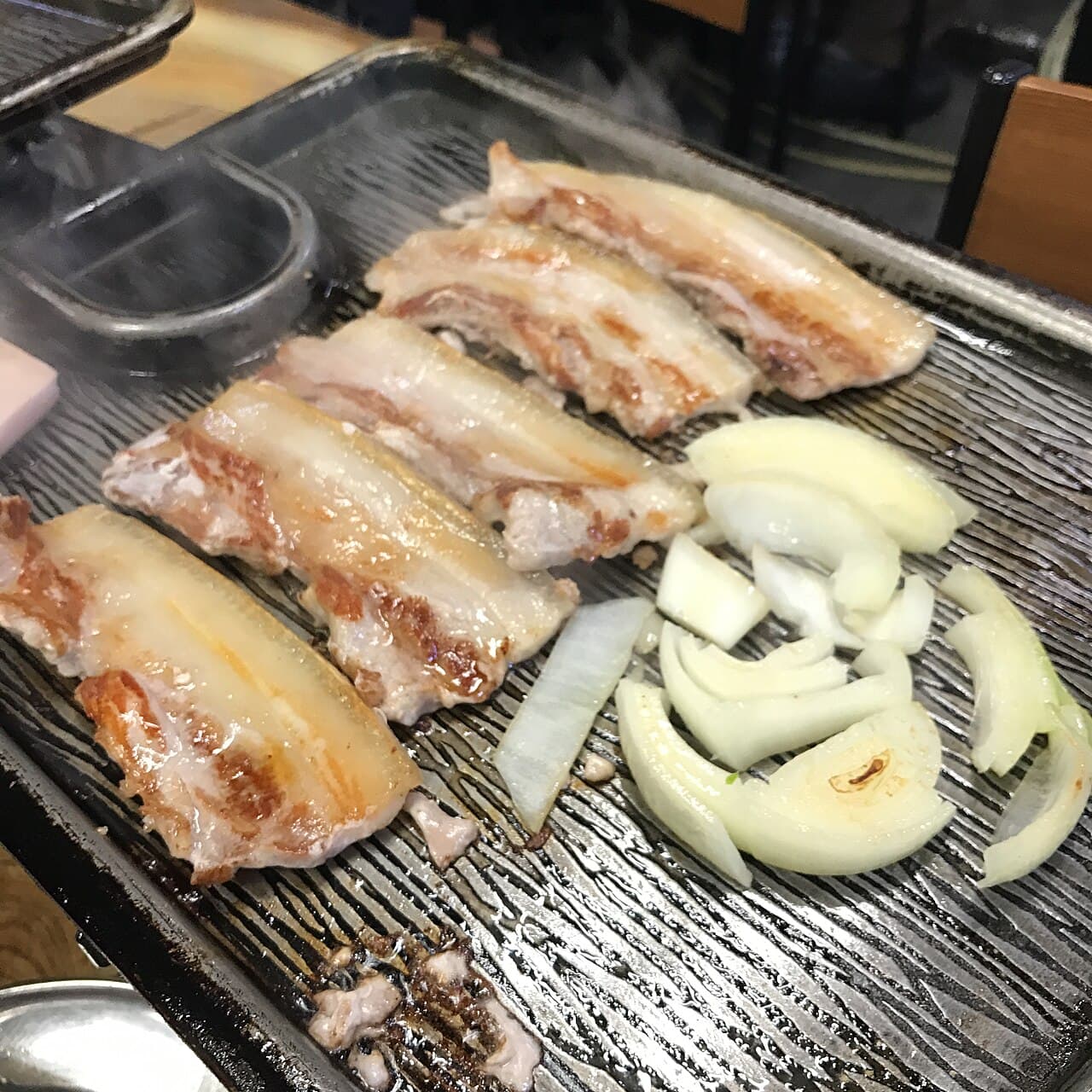
The most common mistake is flipping constantly like a burger. Lay it down, leave it, and turn it once when the edges brown and the top surface turns opaque. Do not crowd the plate either — it drops the temperature and the meat boils instead of searing.
Communal tongs for raw meat only
This is the one hygiene rule Koreans actually care about: raw meat is touched only by the communal tongs and scissors, and your own chopsticks touch only cooked food. Nobody minds that the scissors touched the grill.
Use the edges
Garlic, kimchi, mushrooms and onion go on the cooler edge or in the rendered fat. Grilled garlic is sweet and nutty — nothing like raw — and grilled kimchi is worth doing every time. Pork must be cooked through, with no pink left.
A staff member will lean over your table and cut sizzling meat with kitchen scissors, possibly at speed. Do not be startled — scissors are standard equipment in Korean kitchens, used on grilled meat, cold noodles, kimchi and pancakes. It is neither improvised nor unhygienic, and reacting to it is the clearest sign it is your first time.
How to build a ssam
The meat is rich and fatty; the leaf, the garlic and the sauce cut through it. A ssam is one mouthful.
1
Lay one lettuce leaf flat on your palm. Perilla (깻잎) is intensely herbal — stacking one perilla leaf on one lettuce leaf is the classic move.
2
One piece of meat. One — not two.
3
A dab of ssamjang the size of a pea. It is salty and strong; too much and you taste nothing else. Or dip the meat in the sesame-oil-and-salt dish instead — cleaner, and it lets the pork taste like pork.
4
One or two extras, not five: grilled garlic, the green-onion salad (파채), or grilled kimchi. Pile on all of them and the wrap will not close.
5
Fold the sides in and pinch it shut into one bite-sized parcel.
6
Eat it in one bite. That is the actual rule — ssam is built as a single mouthful so every element lands at once. Biting it in half makes it fall apart and is the beginner tell. Looking slightly ridiculous is normal.
The meal does not end with the meat
Videos stop when the grill empties. Koreans do not get up yet.
Doenjang jjigae
Earthy and savory, served with rice — the most common finish.
Kimchi jjigae
Sour and spicy, and especially good after fatty pork.
Fried rice on the grill
Staff tip rice, kimchi and seaweed onto your used grill plate and fry it in the drippings. If it is available, get it — ask 볶음밥 돼요?
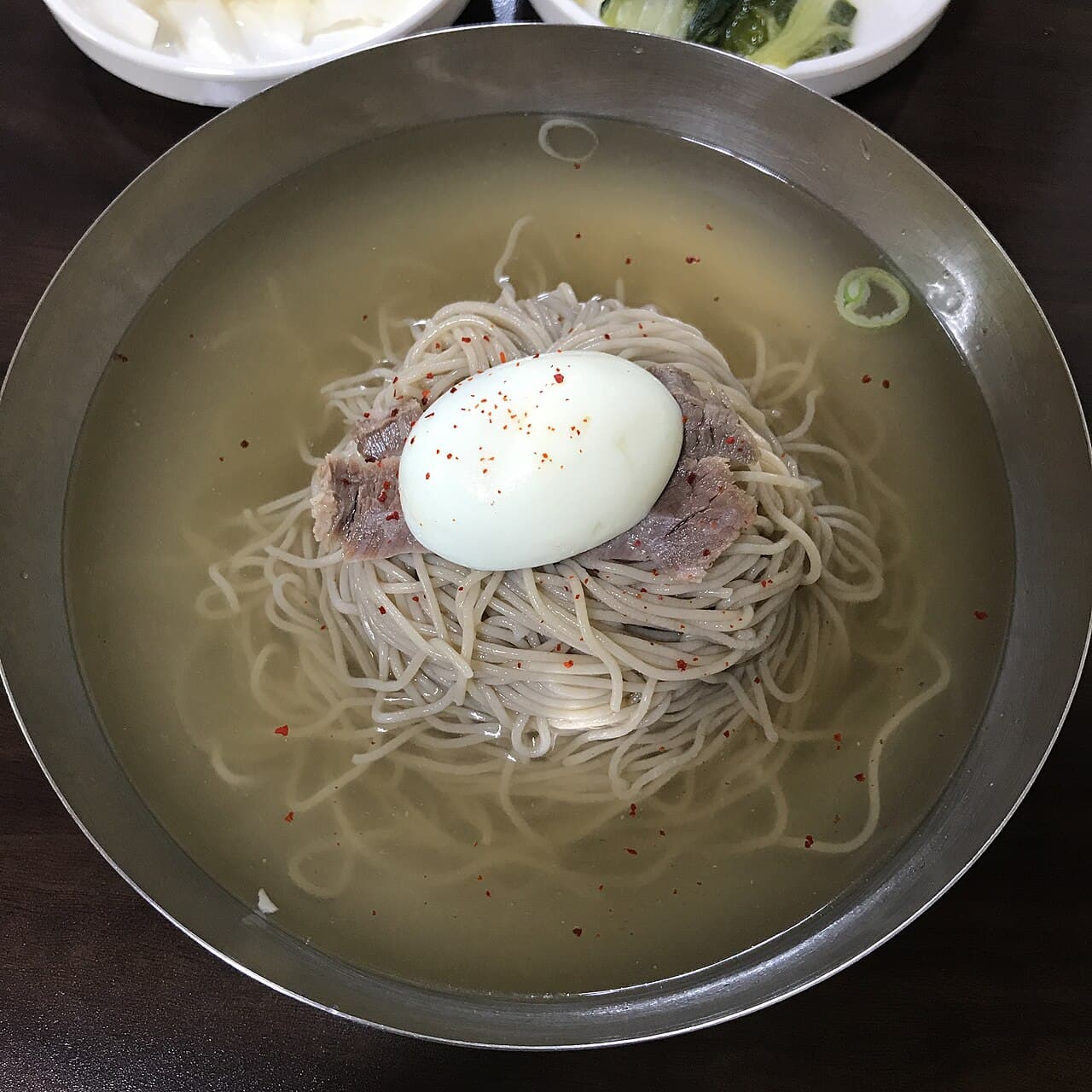
Naengmyeon
Icy and tart, a palate reset — the classic beef-house ending.
ETIQUETTE & PHRASES
Table manners & useful phrases
What surprises first-timers, and the sentences that get you through a meal
1
Press the table bell
Press the button on your table and staff will come. If there is no bell, raising your hand and calling out jeogiyo is completely normal, not rude.
2
Utensils live in the table drawer
Most restaurants keep spoons and chopsticks in a drawer under the table edge or a box on top. Take them yourself — nobody will bring them.
3
Water and side dishes are free
Water is usually self-serve from a station. The small side dishes (banchan) come with your meal at no charge, and you can ask for refills.
4
There is no tipping
Korea has no tipping culture. Pay exactly what the bill says — leave extra and the staff will often chase you down to return it.
5
Pay at the counter on your way out
You do not pay at the table. Take the bill to the counter by the door when you are done. Cards work almost everywhere.
6
Some dishes need two orders
Barbecue, braised dishes and hot pots often have a two-portion minimum. If you are alone, ask before ordering whether one portion is possible.
7
Some rooms are shoes-off
Floor-seating restaurants ask you to take your shoes off at the entrance and use the shoe rack. Choose your socks accordingly.
8
Eating with older Koreans
Wait for the eldest person to lift their spoon first. Receive drinks with two hands and turn your head slightly away when you sip. Nobody expects it from visitors, but it is warmly noticed.
Phrases you can use right away
Tap a phrase to enlarge it, then show your screen to the staff.
DELIVERY & HOTSPOTS
Delivery, takeout & food streets
How to order to your room, and the streets where every door is a restaurant
Delivery apps
Most apps need a Korean phone number to sign up. Start with the ones that work end-to-end in English.
배달의민족 (Baemin)
English mode inside the app
The widest selection by far. Sign-up and payment usually need a Korean phone number.
Romanized addresses will not match. Copy the Korean address from your booking confirmation, and put the room and floor in the request field.
Minimum order and delivery fee
Most shops start around 12,000–15,000 won plus a 3,000-won delivery fee. Choosing takeout instead removes the fee and often adds a discount.
You can order to a hotel
Riders usually come to the lobby — write that in the request field. Some hotels do not allow deliveries, so ask the front desk first.
Store kiosks have an English button
Self-order machines have a language button at the top or bottom of the first screen. Cards work almost everywhere — pick To go first if you are taking it out.
Streets where every door is a restaurant
Do not pick one restaurant — walk the whole street.
SeoulCafes & bakeries
Seongsu
Old factories and warehouses turned into cafes, one after another. People come for a coffee and lose the whole afternoon.
Specialty coffee
Pastry
Brunch
Getting there: Line 2 Seongsu / Ttukseom
SeoulOld taverns & beer
Euljiro Nogari Alley
After sunset the whole alley becomes one outdoor table. Grilled dried pollack with cold beer, the way it has been done for decades.
Grilled dried pollack
Draft beer
Spicy sea snails
Getting there: Line 2/3 Euljiro 3-ga
SeoulTteokbokki
Sindang Tteokbokki Town
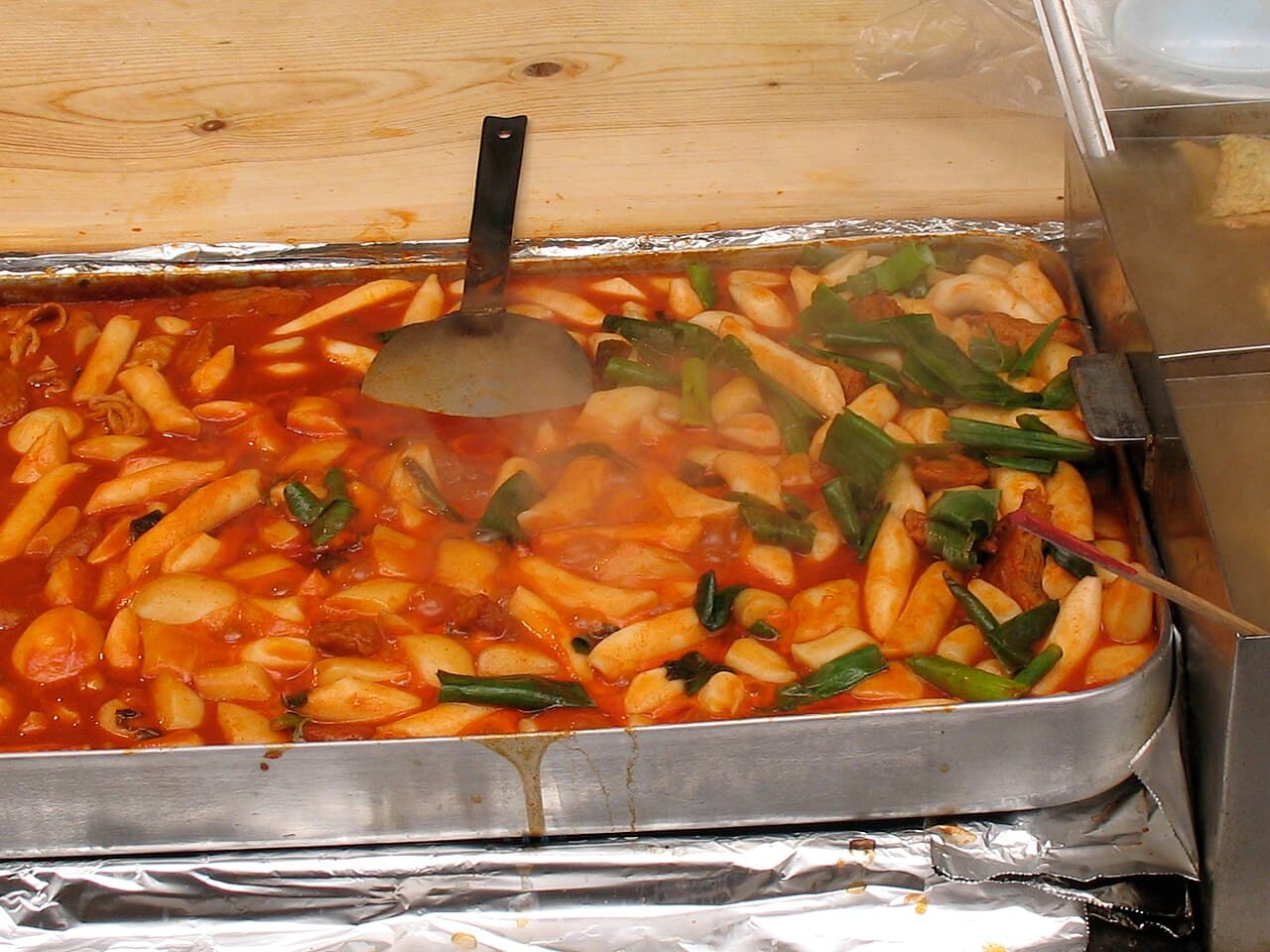
Where instant tteokbokki began. A full pan arrives at your table and you cook it with ramyeon, dumplings and egg.
Pan-cooked tteokbokki
Chewy noodles
Fried rice finish
Getting there: Line 6 Sindang
SeoulMarket street food
Gwangjang Market
Rows of stalls fry and serve right in front of you. If you want to see Korean street food all at once, this is the place.
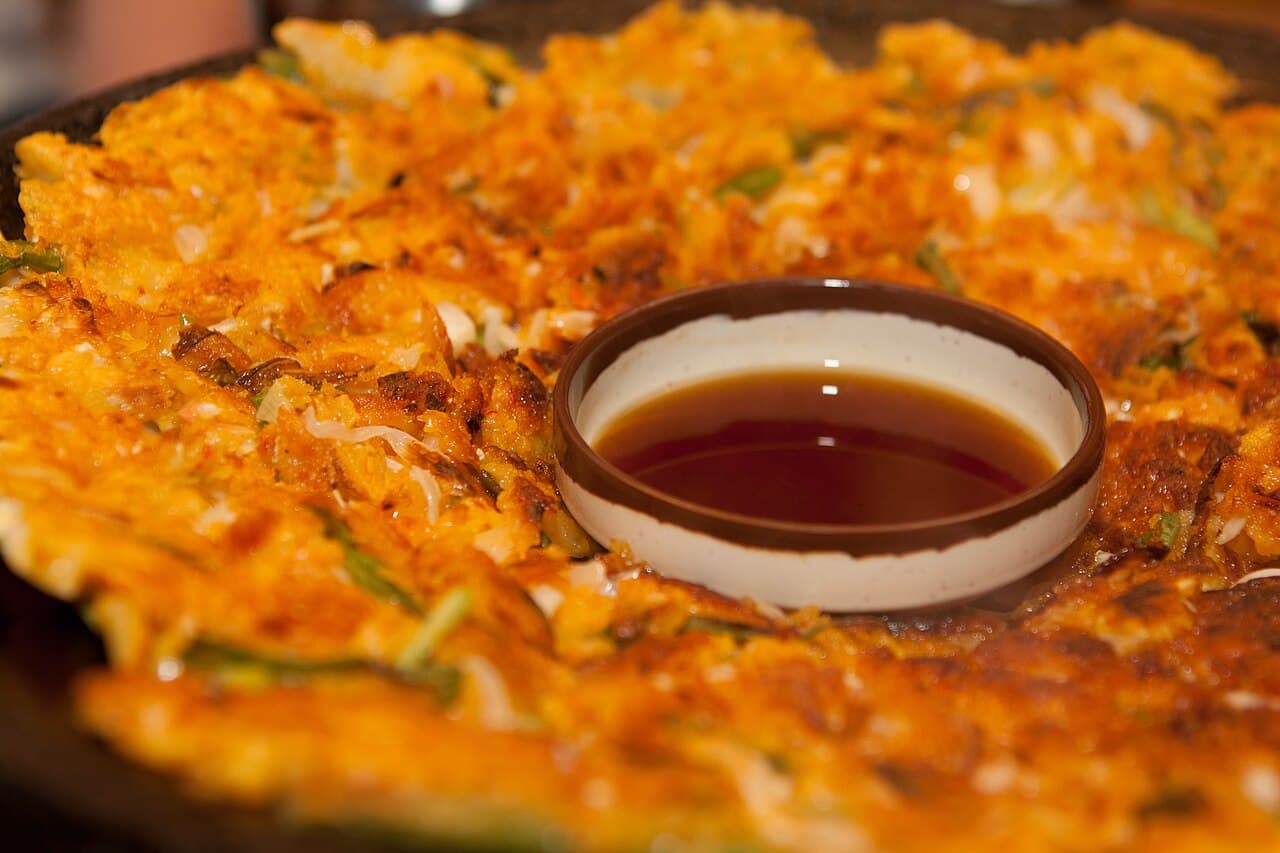
Mung bean pancake
Mini gimbap
Beef tartare
Getting there: Line 1 Jongno 5-ga
SeoulWorld food & brunch
Yeonnam
Small restaurants line the park strip locals call Yeontral Park. Strong on Chinese, Thai and Mexican food when you need a break from Korean meals.
Mala soup & hot pot
Tacos
Brunch cafes
Getting there: Line 2 / AREX Hongik Univ.
SeoulNeighborhood market
Mangwon Market
A real neighborhood market rather than a tourist one, so prices are low. Buy fried snacks and walk down to the Han River with them.
Sweet crispy chicken
Croquettes
Knife-cut noodles
Getting there: Line 6 Mangwon
BusanNight market
Bupyeong Kkangtong Market
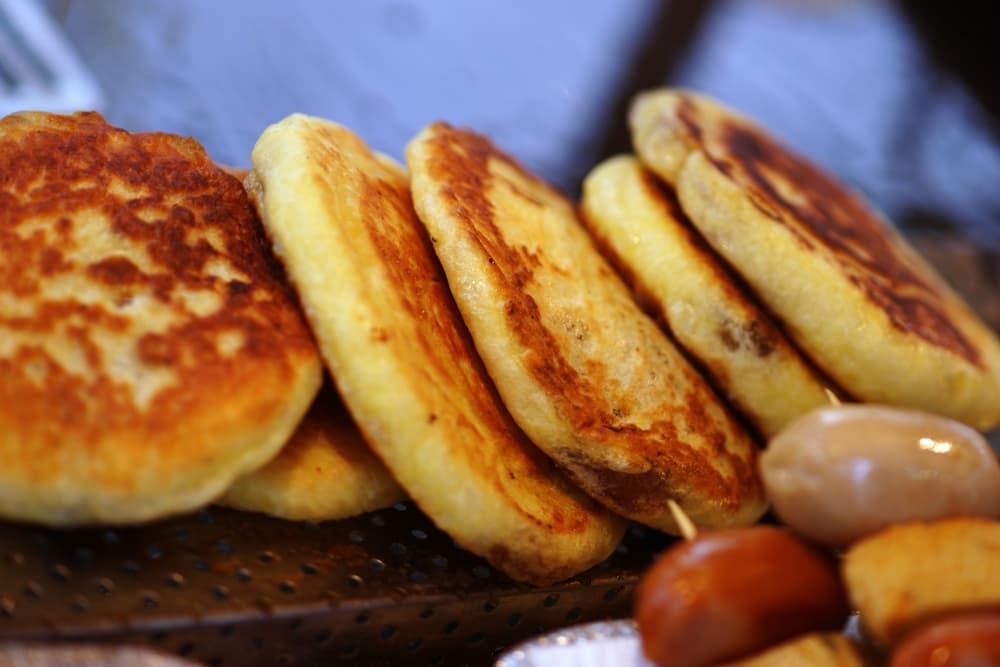
Busan's best-known night market, where food carts fill the aisles after dark. This is where you eat the seeded hotteok.
Seeded hotteok
Fish cake
Stuffed tofu pouches
Getting there: Line 1 Jagalchi
JeonjuKorean food & night market
Jeonju Nambu Market
Right beside the hanok village: a market by day, a night market on Friday and Saturday evenings. The densest eating street in the city that invented bibimbap.
Jeonju bibimbap
Bean sprout soup rice
Blood sausage
Getting there: 5 min walk from Jeonju Hanok Village